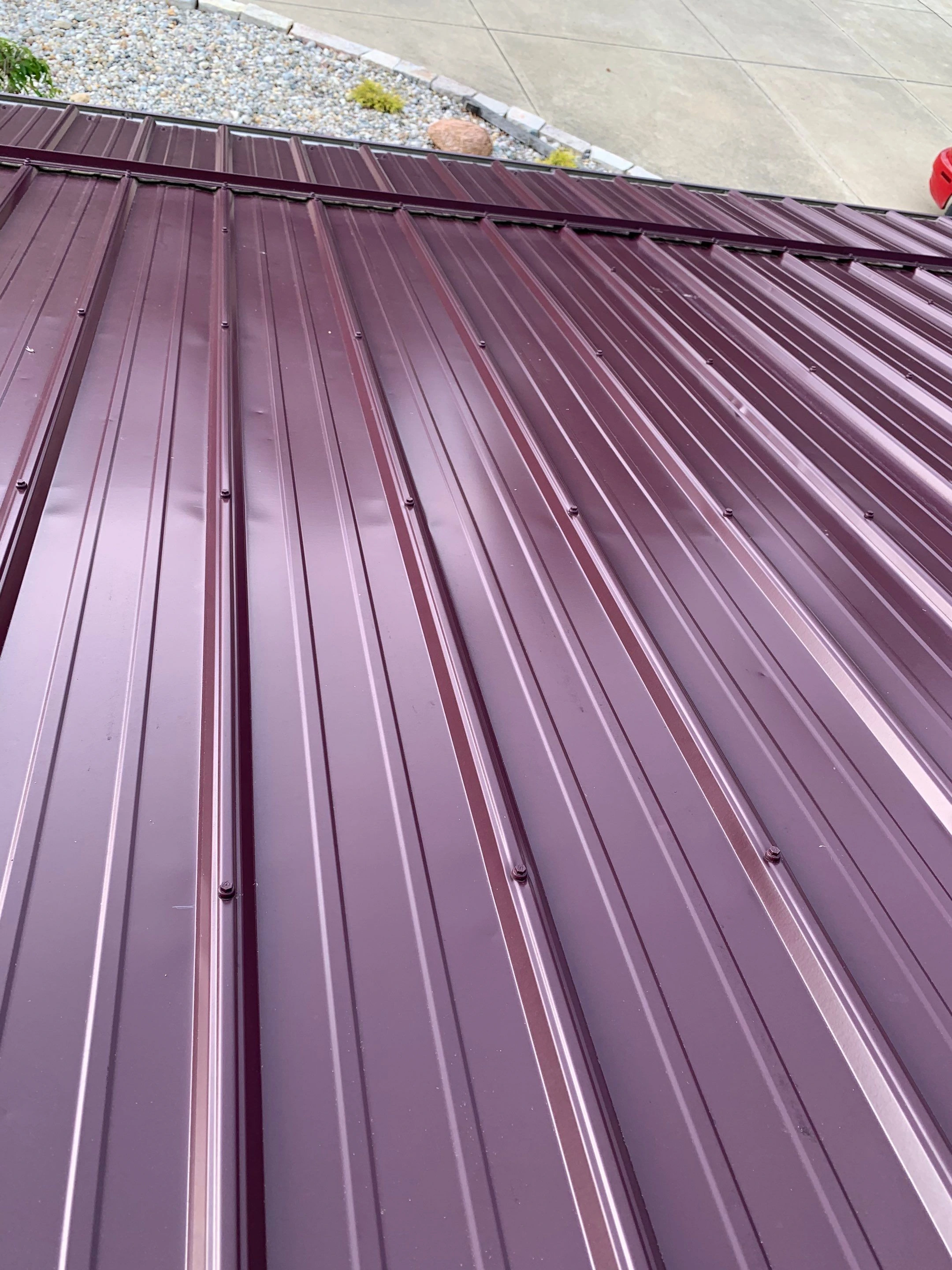
What is the difference between algae and moss on my roof?
Algae shows up as black or dark gray streaks, usually running vertically down the slope that gets the least sun. The species is almost always Gloeocapsa magma, a cyanobacteria that feeds on the limestone filler in asphalt shingles. It is mostly cosmetic in the early stages but traps moisture over time. Moss is a true plant. It forms thick green or brown clumps, often along shingle edges and in valleys where debris collects. Moss roots lift shingle tabs, hold water against the roof deck, and accelerate rot in the wood sheathing below.
Why does my The Parks at Prestwick roof seem to get algae worse than my neighbor's?
Three factors usually explain it. The first is shade. If oak or maple canopy keeps your north or east slope damp past noon, algae will colonize faster. The second is airflow. Homes tucked behind privacy fences, hedges, or other houses get less drying wind. The third is shingle age and type. Older three tab shingles without copper or zinc granules are far more vulnerable than modern algae resistant architectural shingles. Many central Indiana roofs installed before 2010 have none of that protection built in. We also see a pattern where two identical houses on the same street have very different growth rates simply because one has a dryer vent or kitchen exhaust dumping humid air toward the roofline. Small details like that change the microclimate on a single slope.
What about those 50/50 bleach and water mixes I see online?
The chemistry is close to what pros use, but the application is where DIY goes wrong. Contact time matters, concentration matters, and so does temperature. Too strong and you bleach the shingles in uneven patches. Too weak and the algae comes back in six months. Walking a wet, soapy roof is also how people end up in the emergency room. If you still want to handle it yourself, do it from a ladder on the edges only and never on a pitch over 6/12. Keep in mind that runoff from a bleach mix will kill grass and ornamentals on contact, and it will etch aluminum gutters if left to dry. Pros pre wet every bed, run a constant rinse at the downspouts, and neutralize the chemistry before packing up.
How do you actually remove moss without tearing up the roof?
Moss requires a different approach than algae. We apply a moss specific treatment, let it dwell so the plant dies at the root, and then let wind and rain carry the dead material off over the next several weeks. Scraping live moss pulls granules and often lifts shingles. On heavy infestations in neighborhoods like Broad Ripple or Meridian-Kessler where tree cover is dense, we sometimes do two light treatments six months apart rather than one aggressive one. It looks slower but protects the roof better. After the moss dies back, we also clear the valleys and gutters of the dead mat, because that debris holds moisture against the shingles and feeds the next generation if it is left to compost on the roof.
How often should a The Parks at Prestwick roof be cleaned or treated?
For most homes, a professional soft wash every four to six years keeps algae in check. Add zinc strips after the first cleaning and you can often stretch that interval to eight or ten years. Moss prone roofs under heavy tree cover need a visual check every fall when you are clearing gutters. Catching a small patch early is a fifteen minute treatment. Catching it after two winters is a half day job and sometimes shingle replacement.
What can I do between professional cleanings to slow the growth?
A few simple habits make a real difference. Trim back branches that overhang the roof so sun and wind can reach the shingles, ideally leaving at least six to ten feet of clearance above the slope. Keep gutters and valleys clear of leaf litter, because wet debris is where moss spores take hold first. Rinse off visible debris from the ground with a garden hose on a gentle setting rather than climbing up. If you notice a new green patch after a wet spring, call us for a spot treatment before it spreads across the slope. Small, early interventions almost always cost less than waiting for the next scheduled cleaning.
Is the growth actually hurting my roof or just making it look bad?
Both, depending on how long it has been there. Algae alone will shave a few years off the shingle lifespan by consuming filler and trapping heat. Moss is more aggressive. Once the root structure slips under a shingle, it pries the tab up, lets wind drive rain sideways, and creates a slow leak path that often shows up as a ceiling stain long after the damage started. If you are already seeing daylight in the attic or soft spots on the deck, the conversation shifts from cleaning to targeted roof repair or, in older roofs, full replacement.
How do I know if cleaning is enough or if I need a new roof?
This is where an honest inspection matters. We look at granule loss in the gutters, shingle flexibility, nail pop count, and the condition of flashing around penetrations. If the shingles still have life in them, cleaning plus zinc strips is the right call. If the mat is brittle, tabs are curling, or we find rot under moss mats, we will walk you through the signs your roof needs replacement and show you photos of what we found. Every The Parks at Prestwick Metal Roofing inspection ends with pictures, not pressure.
Does insurance cover algae or moss damage?
Generally no. Homeowners policies cover sudden events like hail and wind, not gradual biological growth. That said, if a storm tears off shingles that were weakened by long standing moss, the storm damage portion may still be claimable. We sort that out during the inspection and can help you document it if a claim makes sense. Our free roof inspections include a clear read on what is wear, what is storm, and what belongs on a claim.
Can I pressure wash the algae off myself?
Please do not. Pressure washing is the single fastest way to strip the protective granules off an asphalt shingle, and once those granules are gone the shingle is done. We have replaced roofs in Carmel, Greenwood, and Fishers that were structurally fine until a well meaning homeowner or a pressure washing service blasted them. The correct method is a low pressure soft wash using a sodium hypochlorite solution at the right dilution, applied from a ladder or walkboards, rinsed gently, and kept off landscaping. Professional crews also know which plants to pre soak and tarp so your hostas survive the treatment.
Will zinc or copper strips really prevent it from coming back?
Yes, when installed correctly. Rainwater runs over the metal, picks up ions, and flows down the roof creating an environment algae and moss cannot colonize. We install strips near the ridge so the entire slope gets protection. On a typical The Parks at Prestwick ranch or two story, material and labor run a few hundred dollars and can add years of clean appearance between treatments. It is one of the few roofing upgrades with an obvious visual payoff.